

The race to lead the New Democrat Party is officially underway.
Voting opened on March 9 and ends March 29, when the party will gather in Winnipeg for the NDP convention.
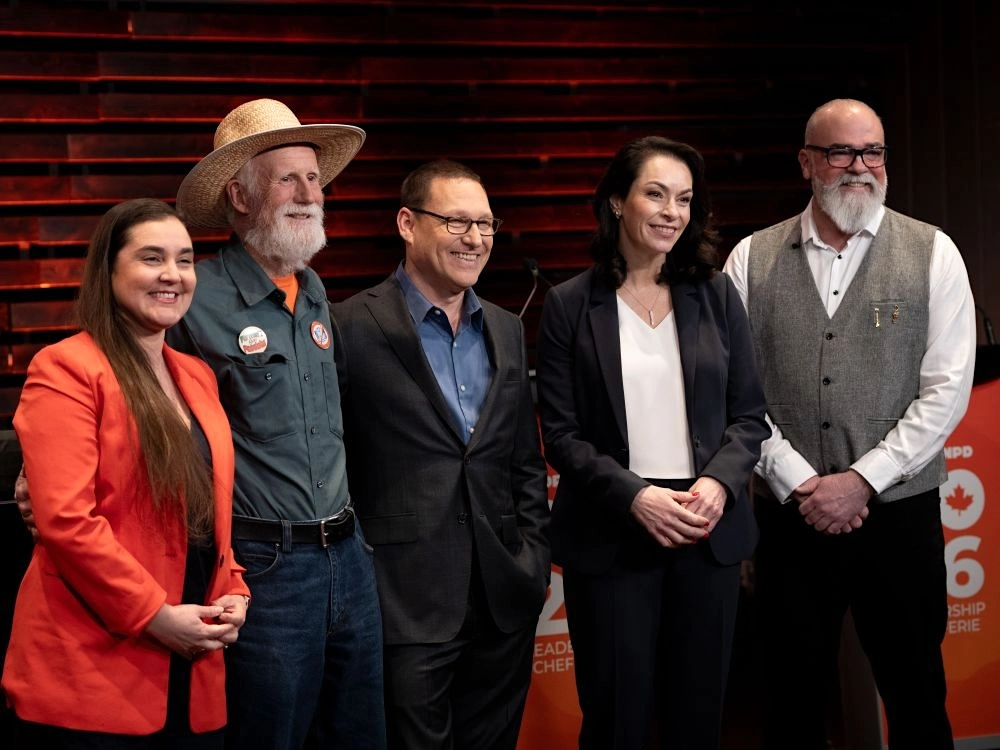
Five leadership contestants are in the race to replace former NDP leader Jagmeet Singh: Edmonton Strathcona MP Heather McPherson, labour leader Rob Ashton, activist and documentary filmmaker Avi Lewis, social worker and Campbell River Coun. Tanille Johnston and organic farmer Tony McQuail.
Sanjay Jeram, a political science lecturer at Simon Fraser University, said Ashton, McPherson and Lewis have emerged as the race’s three front-runners.
Lewis has been able to fundraise more than twice as much money as the next candidate, with nearly three times as many people contributing to his campaign.
“Lewis has been able to fundraise more than twice as much money as the next candidate, with nearly three times as many people contributing to his campaign.”
Although I know this is not true, this statement leads me to think that you can purchase your position. Why should ‘how much money you can raise’ matter?
It’s correlated with votes. Those that donate to a candidate are almost guaranteed to vote for them. Especially since it’s less money on average from more people.
If these are people who signed up to the party due to this campaign, it also shows he can build a movement.
I think I get it. It’s kind of like polls. A possible indicator of future events happening. Thanks.
You’re looking at someone who not only raised more money, but did so using a larger number of smaller individual donations. Both of these speak highly to the chances of winning a federal election on two fronts:
1: Election campaigns are expensive, and you need to fundraise. If you can fundraiser from a large number of ordinary Canadians you won’t be compromised by big corporations
2: If you can convince 3x more people than your opponent to give you money, you can likely convince 3x more people to go out and vote for you. The number of donors strongly correlates with voters because both are a form of political action. They both show a candidate who can mobilise individuals to commit to political action.
Neither of these are “buying an election”, because this isn’t his money he’s using to buy votes, nor is it corporations buying influence that he will have to pay back with preferential treatment.